Structured Topic Modeling of Child Fatal Injury Narratives Using Machine Learning with County-Level Demographic Indicators to Strengthen Prevention Strategies
Abstract
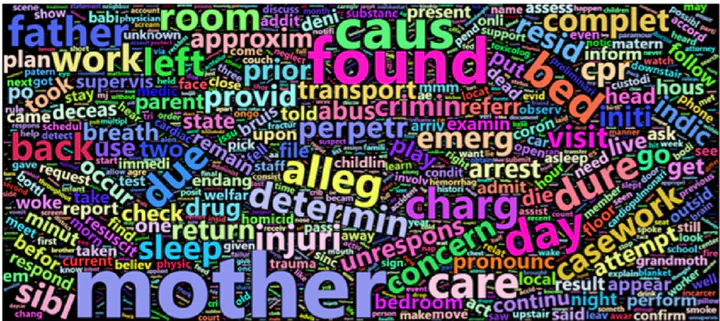
This study applies machine learning and natural language processing to analyze child fatality reports in Pennsylvania from 2016 to 2023. Unstructured text narratives from child death investigations were combined with census data to identify recurring themes and environmental factors surrounding child neglect and traumatic injuries. Using structured topic modeling, the researchers identified 11 distinct circumstances of death, including substance misuse, sleep-related deaths, firearms, and supervisory neglect. The analysis showed that counties with higher poverty levels and larger non-White populations experienced a higher prevalence of firearm-related and severe traumatic injuries. The findings demonstrate how combining clinical narratives with machine learning can strengthen fatality surveillance and help construct more effective, targeted prevention programs.
Plain-Language Summary
This study applies machine learning and natural language processing to analyze child fatality reports in Pennsylvania from 2016 to 2023. Unstructured text narratives from child death investigations were combined with census data to identify recurring themes and environmental factors surrounding child neglect and traumatic injuries.
Using structured topic modeling, the researchers identified 11 distinct circumstances of death, including substance misuse, sleep-related deaths, firearms, and supervisory neglect. The analysis showed that counties with higher poverty levels and larger non-White populations experienced a higher prevalence of firearm-related and severe traumatic injuries. The findings demonstrate how combining clinical narratives with machine learning can strengthen fatality surveillance and help construct more effective, targeted prevention programs.

Dr. Gia Elise Barboza-Salerno
Director
I am an interdisciplinary scholar whose research integrates law, public health, social work, and advanced statistics to study childhood adversity, violence-related harm, and neighborhood-level inequities. I lead the ISSUES Lab at Ohio State, translating spatial and legal analysis into policy and practice.

Dr. Karla Shockley McCarthy
Co-Director
Dr. Karla Shockley, PhD, LMSW, TRCC, FSW, is a Principal Investigator and Senior Research Consultant at the Ohio Colleges of Medicine Government Resource Center, where she leads applied health services and population health research. She uses a collaborative team approach to design and execute mixed methods studies, develops survey instrumentation, oversees qualitative and quantitative analyses, and employs various dissemination methods. Her work centers on translating complex data into actionable insights that inform public health.

Taylor Harrington
PhD Candidate, Methodologist
Taylor Harrington, MS, is a PhD candidate in Public Health at The Ohio State University. To investigate how multi-level factors shape health behaviors and outcomes, she integrates advanced computational and geospatial methods, including machine learning (e.g., computer vision, random forests, structured topic modeling, text mining) and geospatial modeling (e.g., Bayesian spatial modeling, remote sensing). Through this work, she aims to generate actionable evidence to inform equitable health policy and community-level interventions.