Detecting Hidden Mechanisms of Abuse-Related Injury in Children: Structured Topic Modeling of Clinical Death Reviews and Legal Opinions
Presented at the ISPCAN World Congress on Child Abuse and Neglect, Melbourne, Australia, August 2426, 2026.
Full title: Detecting Hidden Mechanisms of Abuse-Related Injury in Children: Structured Topic Modeling of Clinical Death Reviews and Legal Opinions Triangulating Multidisciplinary Child Fatality Reviews with Factual and Procedural Narratives from Case Law
Abstract
Existing child maltreatment surveillance systems miss or misclassify between 8090% of maltreatment deaths, and CPS records undercount fatalities by 5576%. Unstructured narrative text clinical death reviews, court opinions, and social work records accounts for 8090% of all organizational data produced, yet it is rarely leveraged for injury surveillance.
This presentation introduces a two-study AI + Structured Topic Modeling (STM) pipeline that integrates two distinct narrative corpora to recover latent, abuse-related injury mechanisms that structured administrative codes routinely obscure.
Study Design
| Study 1: CFRT Death Reviews | Study 2: CourtListener Case Law | |
|---|---|---|
| Source | Colorado Child Fatality Review Team reports | Appellate opinions retrieved from CourtListener |
| Documents | 223 child-level narrative records | 751 opinions → 335 confirmed cases from Ohio |
| Text | Two free-text fields per report (clinical + administrative) | Facts + procedural history |
| LLM Extraction | GPT-4o-mini: caregiver behavior, injury mechanism, setting, diagnosis | GPT-4o-mini: 9 structured fields including perpetrator, victim type, legal outcome |
| STM Models | Risk & Contributing Factors; Circumstances | Injury Mechanism; Long-Term Consequences |
| Covariate | Incident year (temporal prevalence) | Judicial ruling (affirmed / reversed) |
Research Questions
- Can large language models transform unstructured child fatality narratives into standardized semantic features caregiver behavior, injury mechanism, setting, diagnosis?
- What latent themes emerge, and what typology of risk and incident circumstances do they suggest?
- Do the recovered themes reveal recurring patterns of head and neck trauma consistent with abuse-related injury?
- How does the prevalence of these themes shift across incident years (20202025)?
Key Findings
- Both corpora converge on craniofacial injury as the dominant mechanism routinely undercounted by ICD codes.
- Strangulation emerged as a critical lethality predictor; soft-tissue damage can surface 23 days post-injury, requiring clinician and court training on delayed sequelae.
- Records document long-term neurological harm (cerebral palsy, pituitary damage, blindness) in children often years before clinical follow-up.
- Children represent a structurally distinct injury profile in both datasets, warranting specialized clinical and legal protocols.
- “Accidental” injuries (falls, environmental contact) are frequently embedded in an abuse context screening for mechanism, not just diagnosis, is essential.
- Appellate opinions and death reviews function as injury-surveillance sources beyond structured administrative fields.
Methodology
The pipeline applies:
- PDF parsing (pdftools) and regex isolation of narrative fields
- GPT-4o-mini for LLM-based structured field extraction
- Structured Topic Modeling (STM) with incident year or judicial ruling as a prevalence covariate
- BART zero-shot classification as an independent supervised-style validation check
- FREX word scoring (frequency � exclusivity) for topic labeling
Lab Members
This presentation was developed by the ISSUES Lab team at The Ohio State University:
Dr. Gia E. Barboza-Salerno (Founding Director), Dr. Henriikka Weir, Malcolm McCarthy, Dr. Karla Shockley McCarthy, Dr. Amy Watson-Grace, Dr. Keith Warren, Esenia Cassidy, and Olivia McLucas with collaborators Scottye Cash and Suzanne Perkins.
📄 Presentation
Download the presentation slides here .

Dr. Gia Elise Barboza-Salerno
Director
I am an interdisciplinary scholar whose research integrates law, public health, social work, and advanced statistics to study childhood adversity, violence-related harm, and neighborhood-level inequities. I lead the ISSUES Lab at Ohio State, translating spatial and legal analysis into policy and practice.
Dr. Henriikka Weir
Faculty Affiliate
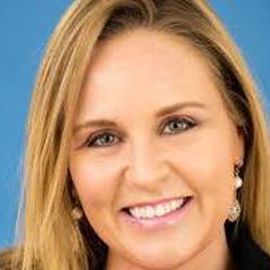
Dr. Henriikka Weir is a Faculty Affiliate in the ISSUES Lab at The Ohio State University.
Malcolm McCarthy
Undergraduate Geospatial Analyst
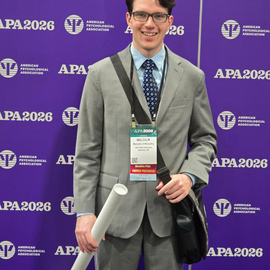
Malcolm is a third-year psychology major with minors in GIS and ASL studies interested in pursuing a clinical psychology PhD.
Dr. Karla Shockley McCarthy
Co-Director
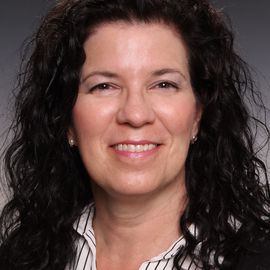
Dr. Karla Shockley, PhD, LMSW, TRCC, FSW, is a Principal Investigator and Senior Research Consultant at the Ohio Colleges of Medicine Government Resource Center, where she leads applied health services and population health research. She uses a collaborative team approach to design and execute mixed methods studies, develops survey instrumentation, oversees qualitative and quantitative analyses, and employs various dissemination methods. Her work centers on translating complex data into actionable insights that inform public health.
Dr. Amy Watson-Grace
PhD Candidate, Methodologist
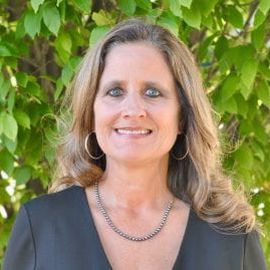
Dr. Amy Watson-Grace is a PhD candidate and occupational therapist with advanced pediatric board certification and extensive clinical and leadership experience.

Dr. Keith Warren
Faculty Affiliate
Dr. Keith Warren is a Faculty Affiliate in the ISSUES Lab and an Associate Professor at The Ohio State University.
Esenia Cassidy
PhD Student, Graduate Research Assistant
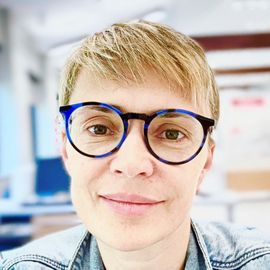
Esenia Cassidy is a PhD Student at The Ohio State University’s College of Social Work whose research is focused on interactions between attachment, trauma, gender identity, mental health, end-of-life care, and use of psychedelics. Beyond CSW/OSU, Esenia is a co-founder of The Psychedelic Humanities Lab at The New School for Social Research (NSSR) and a project lead at the SexTech Lab (NSSR) and the Granqvist Attachment & Psychedelics Lab (Stockholm University).
Olivia McLucas
Undergraduate Research Assistant
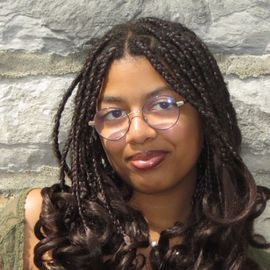
Olivia McLucas is an undergraduate student at the Ohio State University. She is majoring in Statistics with a minor in American Sign Language on a pre-law track. Olivia is serving the team as photographer and videographer, while simultaneously working as a researcher assistant for the scholars.